Introduction
Environmental requirements can become complex as projects move from planning to construction and operation.
Project developers may encounter terms such as IEE, EIA, ESIA, EMP, environmental monitoring, environmental audit and ESG reporting.
Although these terms are related, they do not represent exactly the same activity.
Understanding their purpose can help project owners identify the environmental work required at different stages of a project.
DUCOM (Pvt) Ltd. provides environmental consultancy services covering IEE, EIA, ESIA, EMP, environmental compliance monitoring, environmental audits, environmental due diligence and ESG reporting.
What Is an IEE?
An Initial Environmental Examination (IEE) is generally a more focused environmental assessment compared with a comprehensive EIA.
Its purpose is to identify potential environmental impacts and determine appropriate environmental management measures for projects falling within the relevant regulatory category.
DUCOM describes its IEE service as a rapid environmental assessment for applicable Category I projects under the stated regulatory framework.
The exact regulatory requirement should always be determined from the applicable legislation, project characteristics and competent authority.
What Is an EIA?
An Environmental Impact Assessment (EIA) is a comprehensive environmental assessment.
It may examine:
- Existing environmental conditions
- Potential project impacts
- Air quality
- Water resources
- Soil
- Noise
- Ecology
- Waste
- Other relevant environmental aspects
- Mitigation measures
- Environmental management
- Monitoring requirements
DUCOM’s profile identifies EIA services for applicable Category II projects, including baseline surveys.
What Is an ESIA?
An Environmental and Social Impact Assessment (ESIA) considers environmental and social aspects together.
This broader framework can become particularly important for projects involving international financing or development institutions where additional environmental and social requirements apply.
DUCOM identifies ESIA work aligned with World Bank, ADB and IFC Performance Standards, including IFC PS1–PS8.
IEE vs EIA vs ESIA
| Aspect | IEE | EIA | ESIA |
|---|---|---|---|
| General purpose | Focused environmental assessment | Comprehensive environmental assessment | Environmental + social assessment |
| Scope | More limited | Broader | Broad environmental and social scope |
| Baseline studies | Depending on project | Commonly required | Often extensive |
| Mitigation planning | Yes | Yes | Yes |
| Monitoring | Where applicable | Typically incorporated | Incorporated with environmental/social requirements |
| International-finance requirements | Depends on project | Depends on project | Often relevant |
| Appropriate approach | Determined by project and applicable framework | Determined by project and applicable framework | Determined by project, lender and applicable framework |
Important: The actual requirement should always be determined according to the applicable Pakistani regulatory framework, project category, location, sector and—in international-finance projects—the relevant lender requirements.
Environmental Baseline Studies
Before assessing potential impacts, it is often necessary to understand existing environmental conditions.
Baseline studies may include:
Air Quality
Monitoring may include particulate matter and relevant gaseous pollutants.
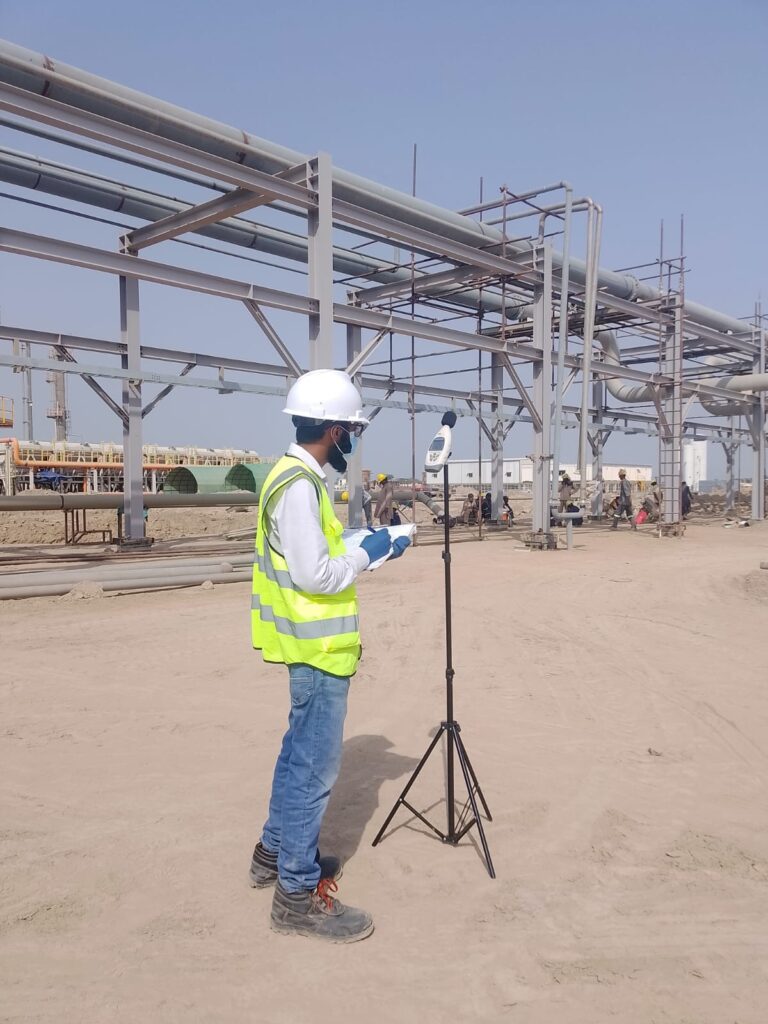
Noise
Noise measurements can establish existing acoustic conditions.
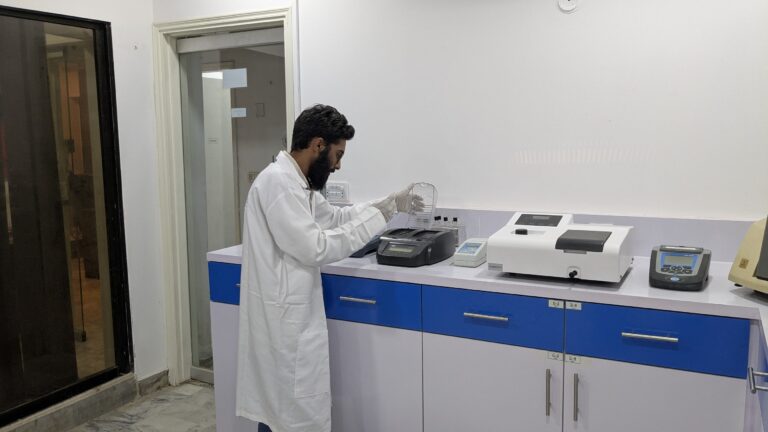
Water
Groundwater, surface water or other relevant sources may be sampled and analyzed.
Soil
Soil analysis may be required depending on project characteristics.
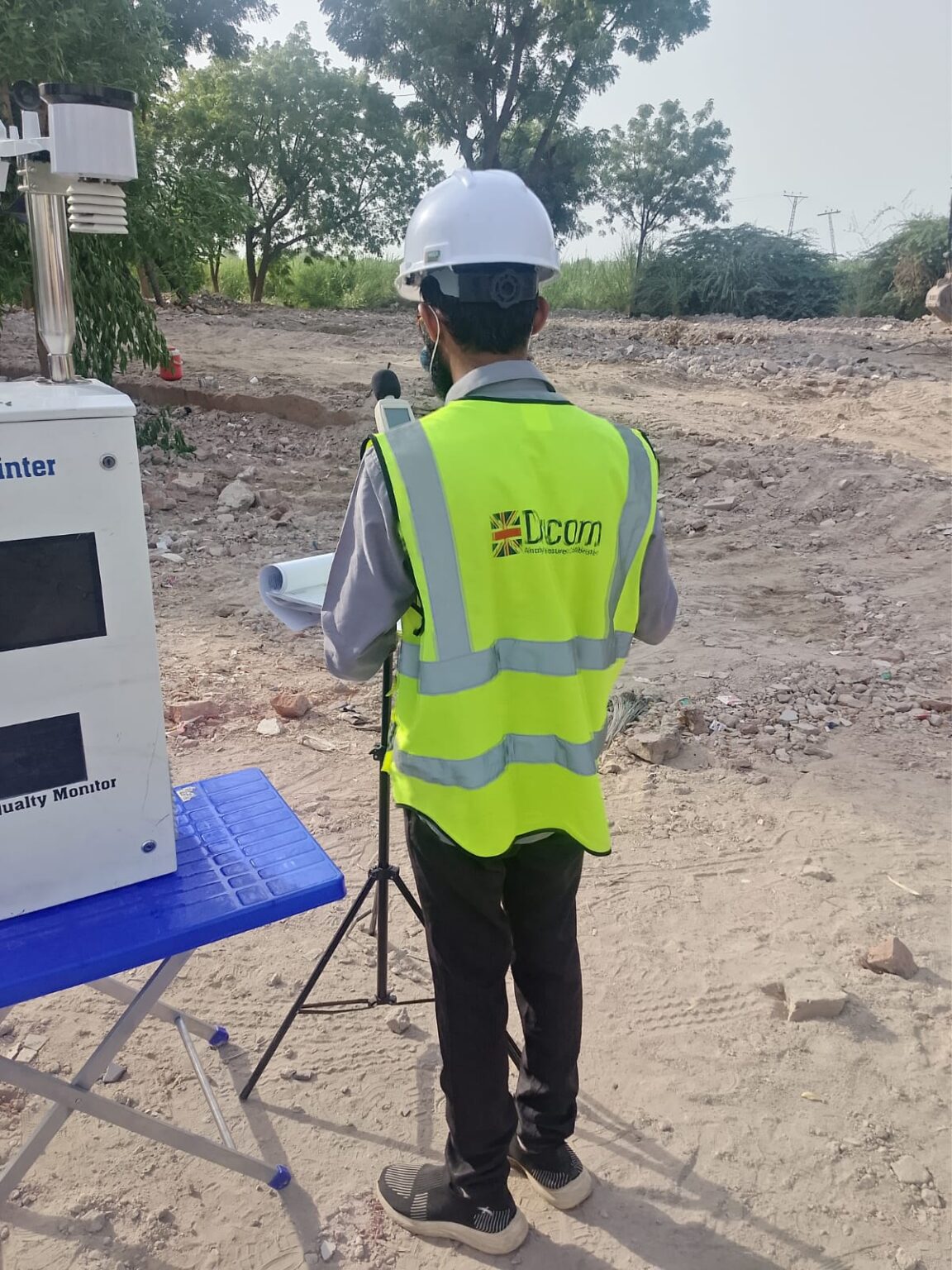
Meteorology
Meteorological information can support environmental assessments, particularly where air-quality or dispersion considerations are relevant.
DUCOM identifies meteorological monitoring as part of its environmental monitoring services and environmental baseline work as part of its broader consultancy capability.
Why Baseline Data Matters
Imagine trying to determine whether a project’s environmental conditions have changed without knowing what conditions existed before the project.
Baseline data establishes a reference point.
It can support:
- Impact assessment
- Environmental management
- Future monitoring
- Comparison of conditions
- Regulatory documentation
- Environmental decision-making
The quality of the baseline therefore matters.
What Is an Environmental Management Plan?
An Environmental Management Plan (EMP) translates environmental assessment findings into practical management measures.
An EMP may establish:
- Environmental controls
- Monitoring requirements
- Responsibilities
- Waste-management measures
- Emission controls
- Water-management measures
- Reporting requirements
- Corrective actions
- Construction-phase controls
- Operational-phase controls
DUCOM identifies EMP frameworks for both construction and operational phases.
Environmental Compliance Monitoring
Environmental assessment should not end when the report is submitted.
During construction and operation, monitoring may be required to determine whether environmental controls are being implemented effectively.
A typical cycle can be represented as:
Environmental Requirement → Monitoring → Laboratory Analysis → Results → Evaluation → Reporting → Corrective Action
DUCOM identifies ongoing environmental compliance monitoring against EMP requirements as part of its consultancy portfolio.
Environmental Audits
An environmental audit provides a structured review of environmental performance and compliance.
It may examine:
- Environmental records
- Monitoring results
- Regulatory requirements
- Environmental controls
- Waste management
- Permit conditions
- Implementation of management plans
DUCOM identifies independent environmental compliance audits among its services.
Environmental Due Diligence
Environmental due diligence can help organizations identify environmental considerations associated with a site, facility, project or transaction.
It can be particularly relevant where an organization needs to understand potential environmental liabilities or risks before making a business decision.
DUCOM lists environmental due diligence within its consultancy portfolio.
ESG Reporting
Environmental, Social and Governance considerations have become increasingly relevant to organizations, investors, development institutions and other stakeholders.
Environmental information used in ESG reporting should be supported by appropriate documentation and reliable data wherever applicable.
DUCOM identifies ESG reporting as part of its environmental consultancy services.
World Bank, ADB and IFC Projects
Internationally financed projects may require environmental and social assessment frameworks in addition to applicable local requirements.
DUCOM’s profile identifies experience aligned with:
- World Bank Environmental and Social Framework
- Asian Development Bank requirements
- IFC Performance Standards
- UN programs
- EPC projects
- CPEC and development projects
The company profile specifically identifies environmental baseline surveys and compliance monitoring aligned with the World Bank ESF, environmental monitoring for ADB-financed infrastructure and energy projects, and ESIA/monitoring aligned with IFC PS1–PS8.
Why Integrated Consultancy and Laboratory Capability Matters
Environmental consultancy frequently depends on analytical information.
For example:
IEE/EIA/ESIA → Baseline Study → Air/Water/Noise Testing → Assessment → EMP → Monitoring → Compliance Reporting
When consultancy and laboratory capabilities are integrated, the process can be coordinated more efficiently.
DUCOM’s service portfolio combines environmental consultancy with environmental monitoring and laboratory testing, creating a field-to-laboratory approach.
Choosing an Environmental Consultant
Project developers should consider:
Technical Expertise
Does the consultant understand the environmental requirements relevant to the project?
Field Capability
Can the team conduct baseline and compliance monitoring?
Laboratory Capability
Can required environmental samples be analyzed appropriately?
Regulatory Understanding
Can the consultant interpret applicable environmental requirements?
Reporting
Can findings be presented clearly and professionally?
Sector Experience
Does the consultant understand the environmental characteristics of the project’s industry?
Planning Environmental Work Early
Environmental requirements are easier to manage when identified during project planning.
A practical project workflow can be:
Project Concept
↓
Regulatory Screening
↓
IEE / EIA / ESIA Requirement
↓
Baseline Environmental Studies
↓
Impact Assessment
↓
Mitigation & EMP
↓
Approval / Implementation
↓
Environmental Compliance Monitoring
↓
Reporting & Auditing
The exact workflow varies according to the project and applicable regulatory or financing framework.
Frequently Asked Questions
What is the difference between IEE and EIA?
Generally, an IEE is a more focused environmental examination, while an EIA is a more comprehensive environmental assessment. The applicable requirement depends on the project and regulatory framework.
What is ESIA?
ESIA is an Environmental and Social Impact Assessment that considers environmental and social impacts within a broader assessment framework.
Is an EMP part of an EIA?
An EMP can form an important part of the environmental management framework resulting from an assessment and can establish mitigation and monitoring measures.
Is environmental monitoring required after an assessment?
Depending on the project, approval conditions and applicable requirements, ongoing environmental monitoring may be necessary during construction and/or operation.
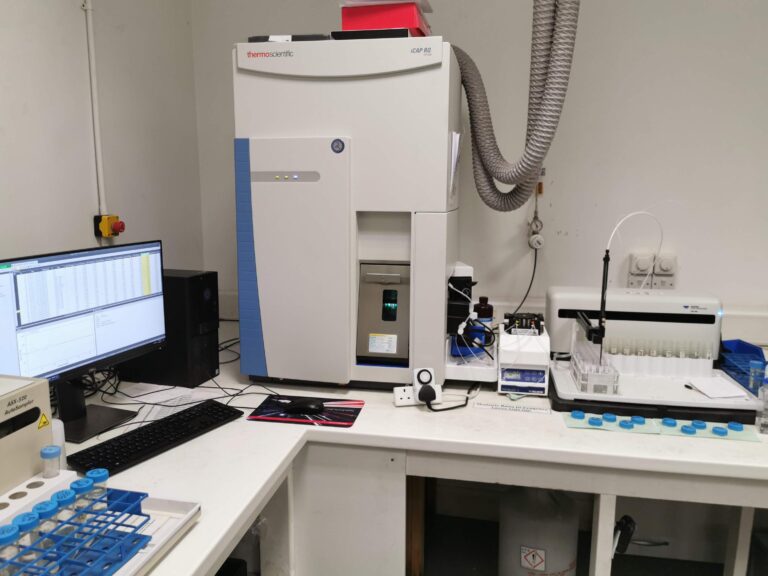
Can laboratory testing be part of an environmental assessment?
Yes. Baseline and compliance assessments may require analytical testing of air, water, wastewater, soil, noise or other environmental parameters.
DUCOM Environmental Consultancy
DUCOM (Pvt) Ltd. provides environmental consultancy services covering IEE, EIA, ESIA, EMP, environmental compliance monitoring, environmental audits, environmental due diligence and ESG reporting.
Its environmental laboratory and monitoring portfolio additionally covers air, water, effluent, stack emissions and noise, with the company’s profile identifying SEPA Environmental Laboratory certification for these areas.
For environmental assessment, baseline studies, monitoring, compliance and environmental consultancy support, contact DUCOM (Pvt) Ltd.