Introduction
Industrial oils and fuels may look similar to the eye while having significantly different analytical characteristics.
For industrial users, laboratory testing can provide information about fuel quality, lubricant properties, petroleum characteristics and transformer-oil condition.
This information can support quality control, material evaluation and equipment-monitoring programs.
DUCOM (Pvt) Ltd. provides chemical, petroleum, oil, fuel, lubricant and transformer-oil testing as part of its laboratory portfolio.
What Does Oil Testing Involve?
Oil testing is not one single analysis.
The appropriate test depends on:
- Type of oil
- Intended application
- New or used condition
- Equipment involved
- Quality specification
- Investigation objective
Possible analyses include:
- Viscosity
- Viscosity index
- Flash point
- Water content
- Sulfur
- API gravity
- Pour point
- Wear metals
- Chemical composition
- Transformer-oil BDV
- Dissolved Gas Analysis
Crude Oil Testing
Crude oil varies significantly in physical and chemical characteristics.
Laboratory analysis can help characterize crude oil through measurements such as:
API Gravity
API gravity provides a standardized way of expressing petroleum density relative to water.
Viscosity
Viscosity describes resistance to flow and is an important physical property of petroleum products.
Pour Point
Pour point provides information about the lowest temperature at which a petroleum product retains specified flow characteristics under the test conditions.
Sulfur
Sulfur analysis can provide information about sulfur content, which is an important characteristic in petroleum evaluation.
DUCOM’s profile specifically identifies API gravity, viscosity, pour point and sulfur content within its crude-oil testing portfolio.
Fuel Testing
Fuel testing can be important for diesel, petrol, furnace oil and other petroleum products.
DUCOM identifies testing of diesel, petrol and furnace oil according to PSQCA and ASTM requirements.
The appropriate test package depends on the fuel type and applicable specification.
Testing can help organizations evaluate whether a fuel meets the characteristics expected for its intended application.
Lubricant Testing
Lubricants are used to reduce friction and wear and support the operation of mechanical systems.
Laboratory analysis can provide information about lubricant properties and, particularly for used oils, characteristics relevant to condition monitoring.
DUCOM identifies:
- Viscosity
- Viscosity Index
- Flash Point
- Wear Metals
- Water Content
within its lubricant-testing portfolio.
Why Is Viscosity Important?
Viscosity describes how readily a fluid flows.
For lubricants, viscosity is a fundamental property because the lubricant must perform within the operating conditions for which it is intended.
A change in viscosity in a used oil sample may therefore be worth investigating as part of an appropriate oil-monitoring program.
DUCOM references ASTM D445 and ASTM D2270 for viscosity and viscosity-index testing.
What Does Flash Point Tell You?
Flash point is a measured characteristic associated with the temperature at which a material produces vapours capable of forming an ignitable mixture under specified test conditions.
It is an important property for the characterization of petroleum products and oils.
DUCOM references ASTM D92 and ASTM D93 for flash-point testing.
Wear-Metal Analysis
Used lubricating oil can contain metallic elements associated with equipment wear, contamination or other sources.
Analyzing these elements can contribute to a condition-monitoring program.
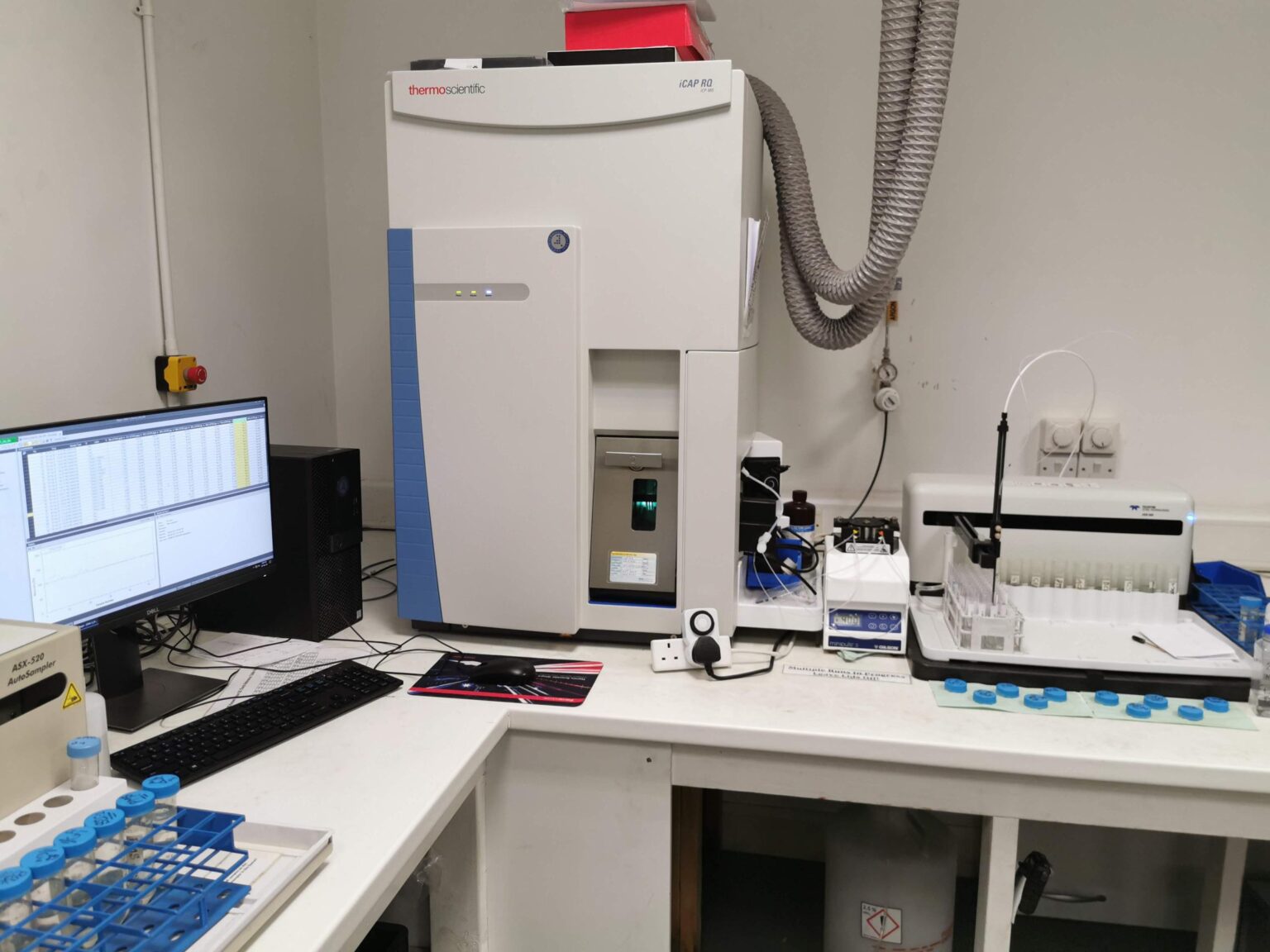
DUCOM identifies ICP-based wear-metal testing and references ASTM D5185.
Trend analysis can be particularly useful when repeated samples from the same equipment are compared over time.
Water Content in Oil
Water can be an undesirable contaminant in many lubricant and industrial-oil applications.
Laboratory testing can quantify water content and provide information that can be evaluated alongside other oil properties.
DUCOM references ASTM D6304 for water-content analysis.
Transformer Oil Testing
Transformer oil requires specialized analysis because it plays an important role in electrical insulation and heat transfer.
DUCOM identifies two important transformer-oil services:
Breakdown Voltage — BDV
BDV testing evaluates the electrical breakdown strength of insulating oil under specified test conditions.
DUCOM references IEC 60156 for transformer-oil BDV testing.
Dissolved Gas Analysis — DGA
DGA examines gases dissolved in transformer oil.
The results can contribute to transformer condition assessment and investigation.
DUCOM references IEC 60567 for DGA.
Advanced Analytical Techniques
Some industrial oil analyses require sophisticated instrumentation.
DUCOM identifies:
- ICP-OES / ICP-MS for trace and multi-element analysis
- GC / GC-MS for organic compounds and hydrocarbons
- HPLC for complex analytical matrices
- AAS for heavy-metal determination
within its laboratory infrastructure.
These techniques allow laboratories to investigate chemical characteristics that cannot be adequately assessed through basic physical testing alone.
Standards Used in Oil and Industrial Testing
DUCOM’s stated standards portfolio includes ASTM, ISO, UOP and IEC among other standards applicable across its laboratory disciplines.
The correct standard depends on the product and specific analytical test.
Who Uses Oil Testing?
Oil and lubricant analysis can be relevant to:
- Oil & gas companies
- Refineries
- Power plants
- Electrical utilities
- Manufacturing facilities
- Equipment operators
- Maintenance departments
- Fuel users
- Industrial laboratories and quality teams
DUCOM’s profile identifies experience with major industrial and power-sector organizations, including PPL, PRL, Total, HUBCO and KE.
Testing New and Used Oil
The purpose of testing can differ depending on whether the sample is new or used.
New Product Testing
The focus may be on:
- Product characterization
- Specification
- Quality control
- Acceptance testing
Used Oil Testing
The focus may include:
- Changes in viscosity
- Water contamination
- Wear metals
- Other changes relevant to equipment condition
A suitable testing program should therefore be designed around the actual objective.
Frequently Asked Questions
What oil products can be tested?
Depending on the laboratory capability and required method, testing can cover crude oil, fuels, lubricants and transformer oil.
Why test used lubricating oil?
Used-oil analysis can provide information about lubricant condition and characteristics that may be relevant to equipment monitoring.
What is transformer-oil BDV?
BDV is a measurement of the electrical breakdown strength of insulating oil under specified conditions.
What is DGA?
Dissolved Gas Analysis examines gases dissolved in transformer oil and can contribute to transformer condition assessment.
DUCOM Oil, Fuel & Lubricant Testing
DUCOM (Pvt) Ltd. provides chemical, oil, petroleum, fuel, lubricant and transformer-oil testing supported by analytical capabilities including ICP-OES/ICP-MS, GC/GC-MS, HPLC and AAS.
For oil, fuel, lubricant or transformer-oil testing, contact DUCOM (Pvt) Ltd. to discuss the appropriate analytical requirements for your application.