Introduction
Environmental performance is closely connected with the way industrial facilities operate.
Factories, power plants, refineries, construction projects, textile units and other industrial activities can interact with the surrounding environment through air emissions, wastewater, noise and other environmental pathways. Understanding these impacts requires more than visual observation. It requires representative sampling, appropriate analytical methods, reliable measurements and technically sound reporting.
Environmental testing provides the scientific foundation for that process.
For organizations operating in Pakistan, environmental monitoring may involve ambient air quality, stack emissions, noise, water and wastewater, occupational exposure, indoor air quality and meteorological measurements. The appropriate testing program depends on the project, industry, environmental risks and applicable requirements.
DUCOM (Pvt) Ltd. provides environmental monitoring and analytical laboratory services covering these areas, with its profile identifying environmental testing against standards and methodologies including USEPA, NEQS, WHO and APHA.
What Is Environmental Testing?
Environmental testing is the measurement and laboratory analysis of environmental samples or conditions to determine their physical, chemical or biological characteristics.
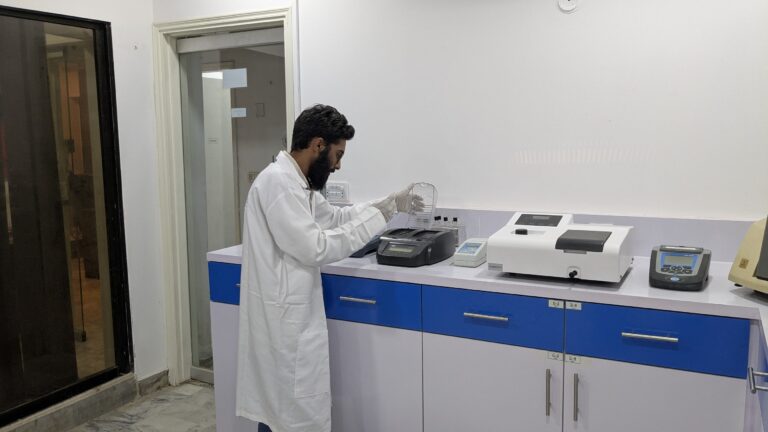
It can include both field measurements and laboratory analysis.
Common areas include:
- Ambient air quality
- Stack emissions
- Vehicular emissions
- Noise
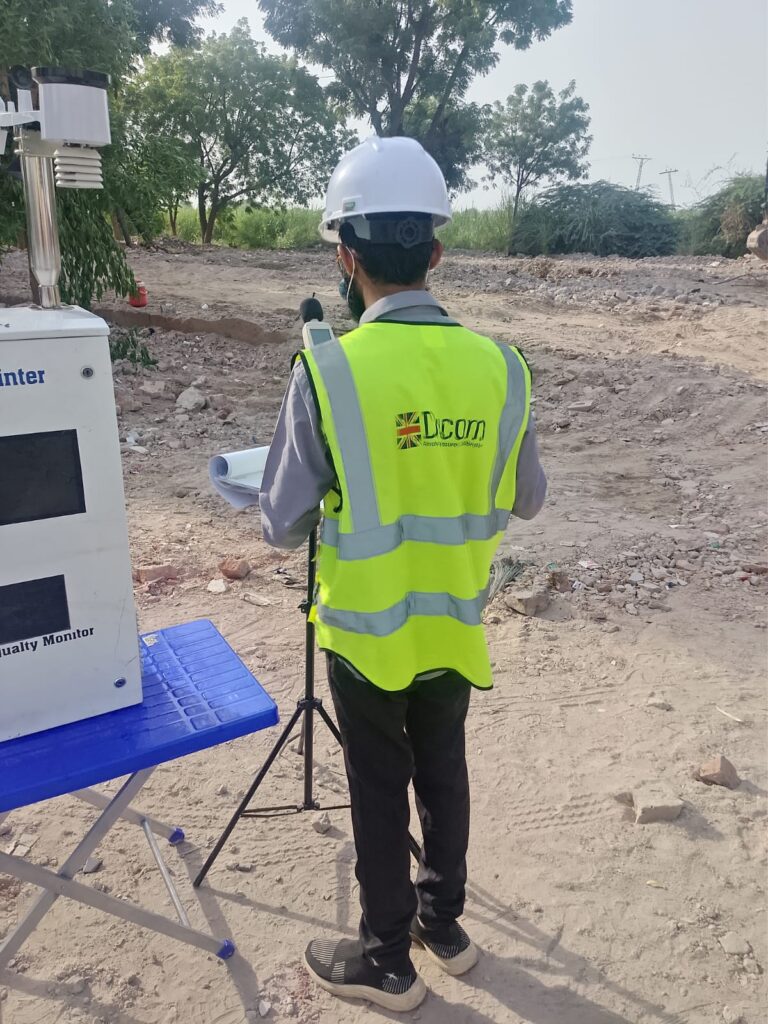
- Meteorological monitoring
- Drinking and potable water
- Groundwater
- Surface water
- Industrial wastewater
- Occupational dust exposure
- Chemical-vapour exposure
- Heat stress
- Radiation
- Indoor air quality
The objective is not necessarily to measure everything. A good monitoring program identifies the right parameters for the specific question being investigated.
Why Is Environmental Testing Important for Industry?
1. Understanding Environmental Conditions
Environmental monitoring establishes measurable information about conditions around a facility or project.
For example, air monitoring can help characterize particulate and gaseous pollutants, while water analysis can identify physical, chemical and microbiological characteristics.
2. Supporting Compliance
Environmental data may form part of regulatory and environmental compliance documentation.
Testing against applicable requirements allows organizations to compare measured conditions with relevant criteria.
3. Identifying Changes
Periodic monitoring creates a record that can help identify changes over time.
Unexpected changes may indicate operational issues, changes in raw materials, treatment-system performance or other factors requiring investigation.
4. Supporting Environmental Management
Environmental data can support decisions about pollution-control measures, wastewater treatment, emission controls and other environmental management activities.
Air Quality Monitoring
Air quality monitoring can be divided broadly into ambient air monitoring and emission-source monitoring.
Ambient Air Quality
Ambient monitoring measures air conditions in the surrounding environment.
Depending on the monitoring objective, parameters can include:
- PM2.5
- PM10
- SO₂
- NOₓ
- CO
DUCOM’s environmental monitoring portfolio identifies these parameters within its ambient-air services.
Monitoring locations and duration should be selected according to the purpose of the assessment and characteristics of the site.
Stack Emission Monitoring
Stack monitoring focuses on emissions released from industrial sources.
It can be relevant to:
- Power plants
- Industrial boilers
- Refineries
- Manufacturing facilities
- Other emission sources
The objective is to obtain representative information about emissions from the relevant source.
DUCOM identifies SEPA-certified stack-emission monitoring among its environmental services.
Noise Monitoring
Noise is another important environmental parameter.
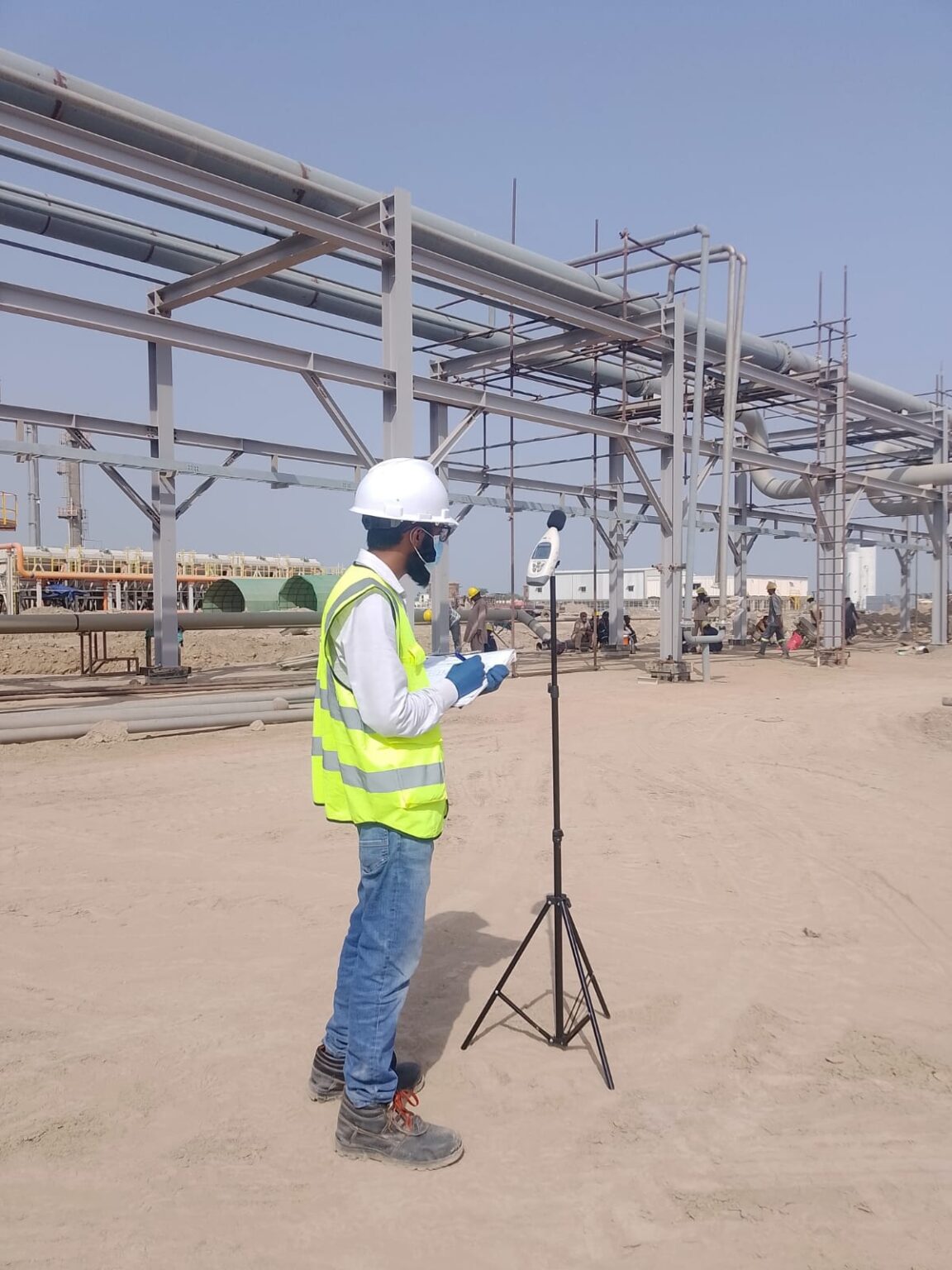
Industrial operations, construction activities, machinery and transportation can create noise that may need to be monitored.
Environmental noise assessments can include measurements such as LAeq, depending on the monitoring objective and applicable requirements.
DUCOM identifies ambient and industrial noise monitoring according to NEQS and WHO requirements within its environmental monitoring portfolio.
Water and Wastewater Testing
Water testing is one of the most important components of environmental laboratory work.
Different sources require different analytical approaches.
These may include:
- Drinking water
- Potable water
- Groundwater
- Surface water
- Process water
- Industrial wastewater
- Treated effluent
Typical parameters can include:
- pH
- TDS
- BOD
- COD
- Heavy metals
- Coliforms
- E. coli
DUCOM’s profile identifies water and wastewater testing covering these applications and parameters, with APHA and USEPA methods referenced for specific analyses.
Occupational and Indoor Environmental Monitoring
Environmental monitoring can also extend inside workplaces.
Depending on the workplace, organizations may need to evaluate:
- Personal dust exposure
- Chemical vapour exposure
- Heat stress
- Radiation
- Light intensity
- Indoor air quality
- TVOC
- CO₂
- Formaldehyde
- Biological contaminants
DUCOM identifies occupational hygiene and indoor-air-quality monitoring as part of its environmental service portfolio.
Why Sampling Quality Matters
A laboratory cannot produce a representative result from a poorly collected sample.
Environmental testing should therefore be viewed as a complete chain:
Planning → Sampling → Preservation → Transportation → Laboratory Analysis → QA/QC → Reporting
Each stage matters.
Sampling locations should be appropriate to the monitoring objective. Samples should be collected in suitable containers and handled according to applicable requirements. Where necessary, preservation and transportation conditions should be controlled.
DUCOM describes its approach as a unified field-to-laboratory QA/QC process extending from site activities through reporting.
Standards and Analytical Methods
Environmental results become more useful when appropriate recognized methods and standards are applied.
DUCOM identifies the following standards and methodologies within its laboratory profile:
- ASTM
- USEPA
- APHA
- AOAC
- IP
- UOP
- ISO
- BS
- IEC
- WHO
- NEQS
The applicable method depends on the specific test and analytical requirement.
What Should You Look for in an Environmental Laboratory?
Before selecting a laboratory, organizations should consider:
Relevant Certification
The laboratory should have credentials relevant to the work being undertaken.
DUCOM’s profile identifies its ISO 9001:2015 registration and SEPA Environmental Laboratory certification, with the latter covering effluents, water, stack emissions, air and noise.
Technical Capability
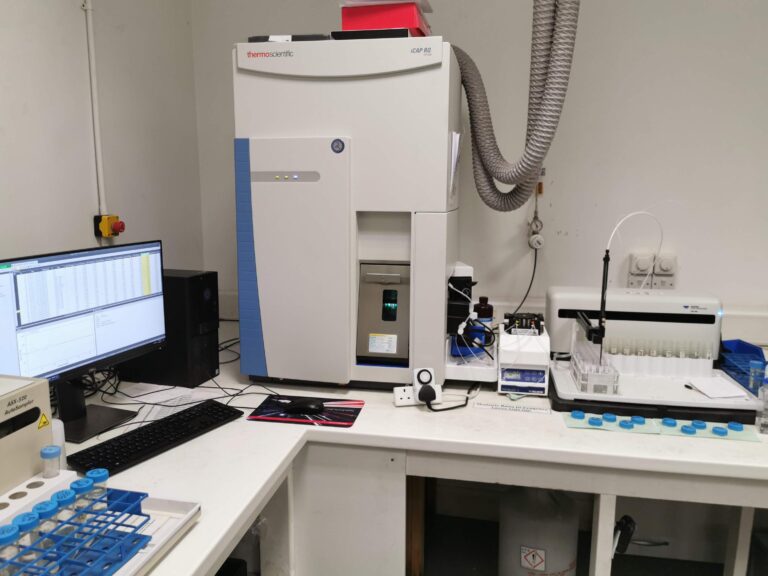
The laboratory should have appropriate analytical equipment and technical personnel.
DUCOM identifies ICP-OES/ICP-MS, GC/GC-MS, HPLC and AAS among its advanced analytical capabilities.
Field Capability
For environmental projects, laboratory capability alone may not be enough. The organization may also require professional field monitoring.
DUCOM operates from Karachi, Lahore and Quetta and states that its mobile teams can be deployed nationwide.
Environmental Testing Is More Than a Compliance Exercise
A good monitoring program provides information that organizations can use.
It can help answer questions such as:
- What are the existing environmental conditions?
- Are emissions changing?
- Is wastewater treatment performing as expected?
- Are workplace exposures being monitored?
- Are environmental controls working?
- Is additional investigation required?
The value of testing therefore extends beyond producing a laboratory report.
Frequently Asked Questions
What does environmental testing include?
Environmental testing can include air, water, wastewater, stack emissions, noise, occupational exposure and indoor-air-quality monitoring, depending on project requirements.
Why is laboratory testing important?
Laboratory testing provides quantitative analytical information that can support environmental assessment, compliance and management decisions.
What standards are used for environmental testing?
The applicable standard depends on the test. DUCOM’s stated standards portfolio includes USEPA, ASTM, APHA, ISO, WHO and NEQS, among others.
Does environmental testing require field sampling?
Many environmental assessments require field sampling or field measurements. Proper sampling is an important part of obtaining representative results.
DUCOM Environmental Testing Services
DUCOM (Pvt) Ltd. provides environmental monitoring and analytical services covering air quality, stack emissions, noise, meteorology, occupational hygiene, indoor air quality, water, wastewater and related environmental testing.
Need environmental testing or monitoring support? Contact DUCOM (Pvt) Ltd. for laboratory and field services tailored to your project requirements.